Exception for a Hero
A shared spreadsheet, a presidential oath, and a marshal on a bridge: how one man writes an exception for himself, and what the rest of us do with the empty cell.
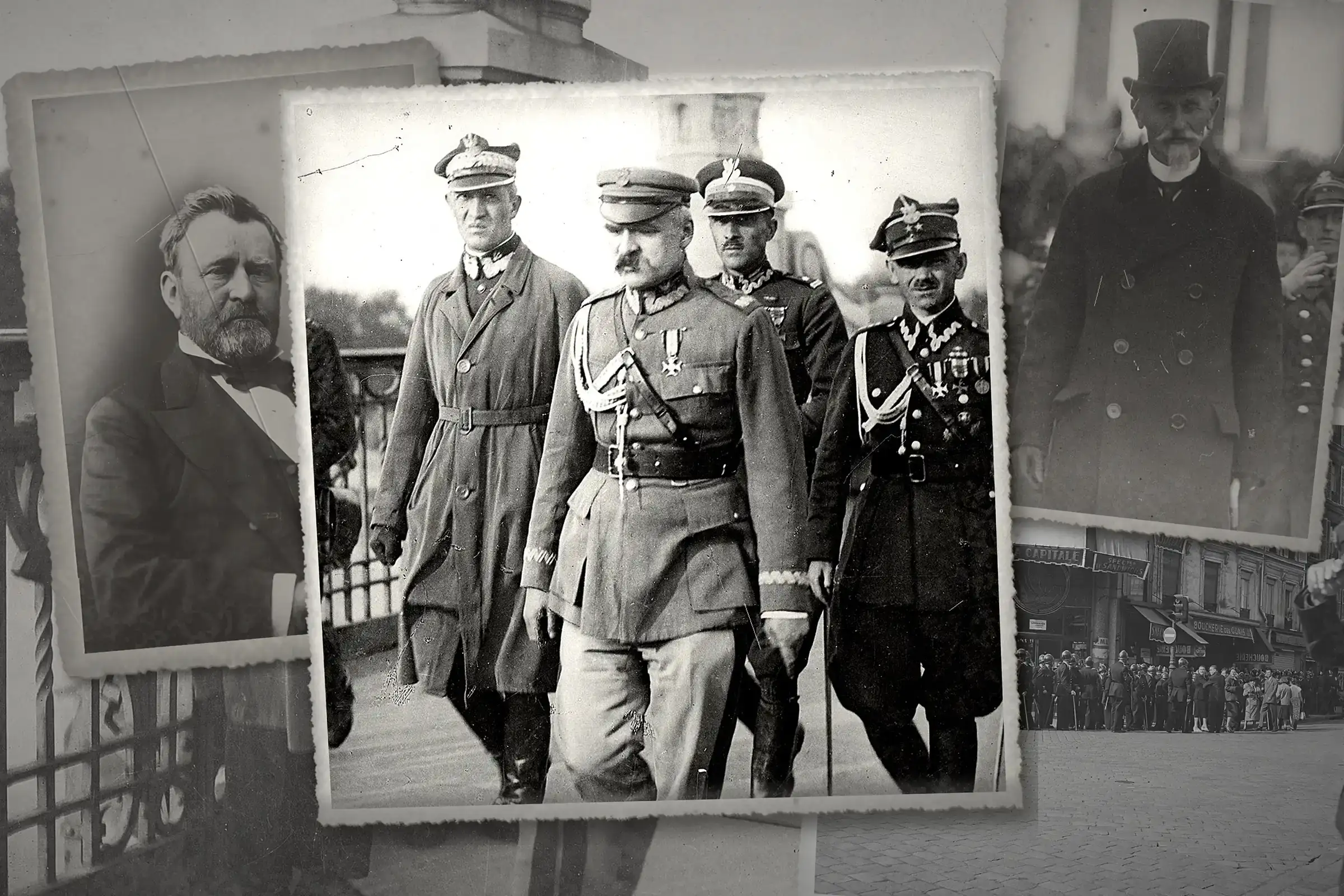
Колаж CAUSSA з архівних фото: NAC 22-243 (Marian Fuks), NAC 1-P-2702a, NAC 1-A-1282, NPG.80.183, Nationaal Archief 909-6038 (Anefo)
A hero writes his own exception. He gives his word to himself in advance, aloud, in a measure anyone can count, and then gratitude does not have to choose between debt and law. A rule that knows his name today will know someone else's tomorrow.
In Singapore’s parliament, Lee Kuan Yew rose to read a statement on the suicide of the Minister for National Development, Teh Cheang Wan, who was under investigation on suspicion of taking bribes. It was a ministerial statement. The prime minister read to the house the entire note addressed to him: three sentences without a date. The note was signed. The minister had been the architect of housing estates, and he had been brought into public office at the prime minister’s request, as Lee Kuan Yew wrote in his own letter of condolence. “I feel I should accept full responsibility,” Teh wrote. Lee told the house that on the morning he read the note, he marked the time on the corner of the envelope.
On Monday morning the screen shows a shared spreadsheet with a queue for bonuses, leave and places, and the manager who pulled the team through the hardest year enters his protégé above the first row. In the justification column he adds a short note: his decision. Until this very morning, one woman’s name had occupied the top position. In the work chat, she posts “he’s done so much,” then clicks “I approve.” Approvals hurry down the column beneath hers: the next person reads the chat and clicks the button, then another sees someone else’s consent before them and adds their own. One cell remains empty, and its owner keeps the spreadsheet open. When the man everyone is grateful to writes in an exception for himself, who else can refuse him?
In Singapore, before the parliamentary statement, while the investigation was still under way, Teh Cheang Wan asked through the cabinet secretary for a meeting with Prime Minister Lee Kuan Yew. The prime minister replied that he would meet him after the investigations were completed. Years afterward, Lee Kuan Yew himself discussed this request and reply in his memoirs as well as in a speech. A letter addressed to Lee Kuan Yew was written by Teh Cheang Wan on 13 December. Lee received it. The portfolio personally held by the prime minister included the bureau charged with investigating corrupt practices. It operated with his full support. Once the open investigation had begun, the two men never met again.
In the Serebryansky Forest I once wrote down a few rules for myself, in advance, while no concrete event yet demanded a decision from me. The woman I now cherish was not yet in my life. Wet pine needles held the silence between the trunks, and I looked for a long time at the grey strip of water beyond them.
In Washington, one Saturday morning in February, Chief Justice Waite arrived at the White House to administer the oath to President Grant. Both sides had agreed on the questions in advance. Babcock, the president’s private secretary who had been with Grant since the war, was standing trial in St. Louis, in the Whiskey Ring case, and under oath the president called his trust in him “unshaken.” He was then asked whether Babcock’s conduct or conversations had shown any interest in the conspiracy or any connection to it. Grant answered: “Never.”
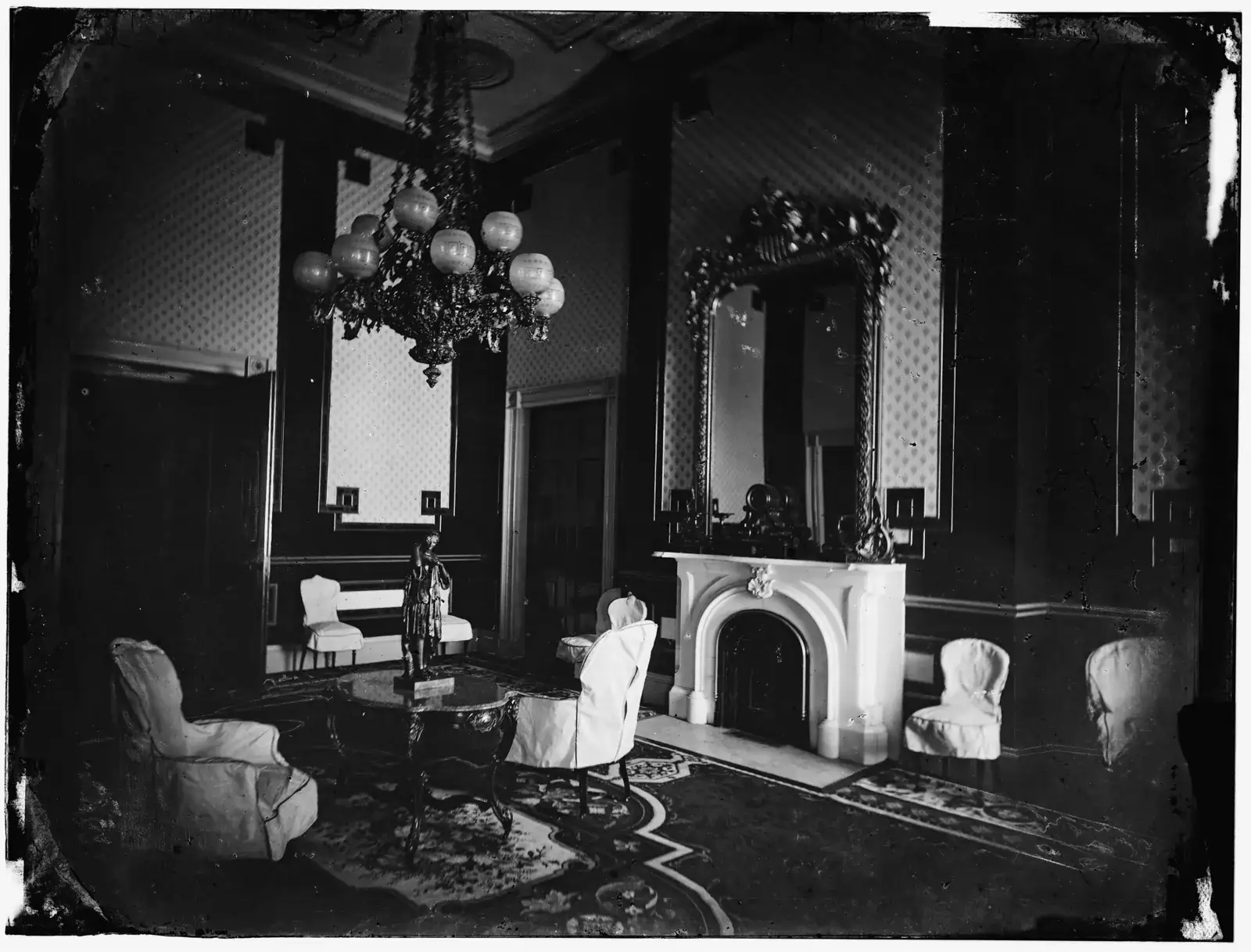
Six months before the oath, the president had received a letter from a supporter warning that the Whiskey Ring conspirators were threatening to draw Babcock into the case. Grant took that very sheet, on which the supporter’s warning already stood. He wrote on it one line in his own hand, without adding a separate paper, and sent the letter on together with this order: “Let no guilty man escape if it can be avoided.” The paper bore both lines: another man’s warning and the president’s order. That same February in St. Louis, the jury came back after two hours and acquitted Babcock.
Before lunch, a colleague who has belonged to the team since day one is shown typing a message for a long time in the chat beneath the spreadsheet. He stops several times, then deletes the text and never sends it. Instead, he enters his approval in the column beside those that appeared that morning. The column grows longer by one line.
In Warsaw in 1926, at about five in the evening, President Wojciechowski was waiting on Poniatowski Bridge when a car carrying several officers pulled up, and Marshal Piłsudski himself walked over to him. Declaring that he was protecting the Polish army’s honour, the president greeted him; the marshal then seized his sleeve and spoke in a choked voice: “Come, come! Not like that.” Wojciechowski shook off his hand, replied that here he represented Poland, and demanded that any claims follow the legal road, to which Piłsudski said: “For me the legal road is closed.” According to the testimony of Lieutenant Piątkowski, the marshal asked to be let through, the president struck his cane against the cobblestones and answered that no, he could not let him through, after which Piłsudski walked past him toward the line of soldiers. Piłsudski’s coup d’état left 379 dead in its wake.
On Friday, the spreadsheet opens again on the screens, and the newest colleague, who has been on the team for only a month, enters a single word in her cell: “no.” After thanking all the participants in the chat, the manager changes the top row’s status to “approved.” His ordering remains in the queue, while everyone else goes back to work and says nothing about the refusal. The word “approved” remains in the status cell.
The bridge was still five years away when Piłsudski’s opponents, fearing his influence over the soldiers, wrote Article 46 of the March Constitution: The armed forces are headed by the president, yet he cannot hold supreme command in wartime. Nine years had passed since the bridge when the April Constitution introduced a presidential system; beneath it, the marshal placed his last official signature. The president signed the document a few days later, and nineteen days after that signature Piłsudski died.
A few months later another administrator now keeps the spreadsheet, and the manager no longer works on the team. Her eyes move to the top row, and in the chat she asks who made the decision. The reply comes from the woman who once had first place in the queue: “The hardest year.”
In Paris in 1958, the National Assembly convened to vote on de Gaulle’s investiture. The army in Algeria was close to mutiny. On 24 May, paratroopers arriving from Algeria seized Corsica. The operation began with the taking of the island. Operation Resurrection was already prepared: paratroopers and armour were to seize Paris and remove the government. The investiture vote took place on 1 June. The Assembly voted for the general. The next day he received full powers. Did the army leave the National Assembly any other name that day besides de Gaulle?
Ten days before the referendum on choosing the president through universal suffrage, de Gaulle stood before radio microphones and television cameras in Paris on 18 October 1962. In his address he set the first condition: if the answer was “no,” he would leave. He named a second condition as well: if the “yes” proved, in his own words, “weak, mediocre, uncertain,” he would leave too. The voters answered the question on 28 October. “Yes” won. Only 46.66 percent of registered voters had said it. He stayed.
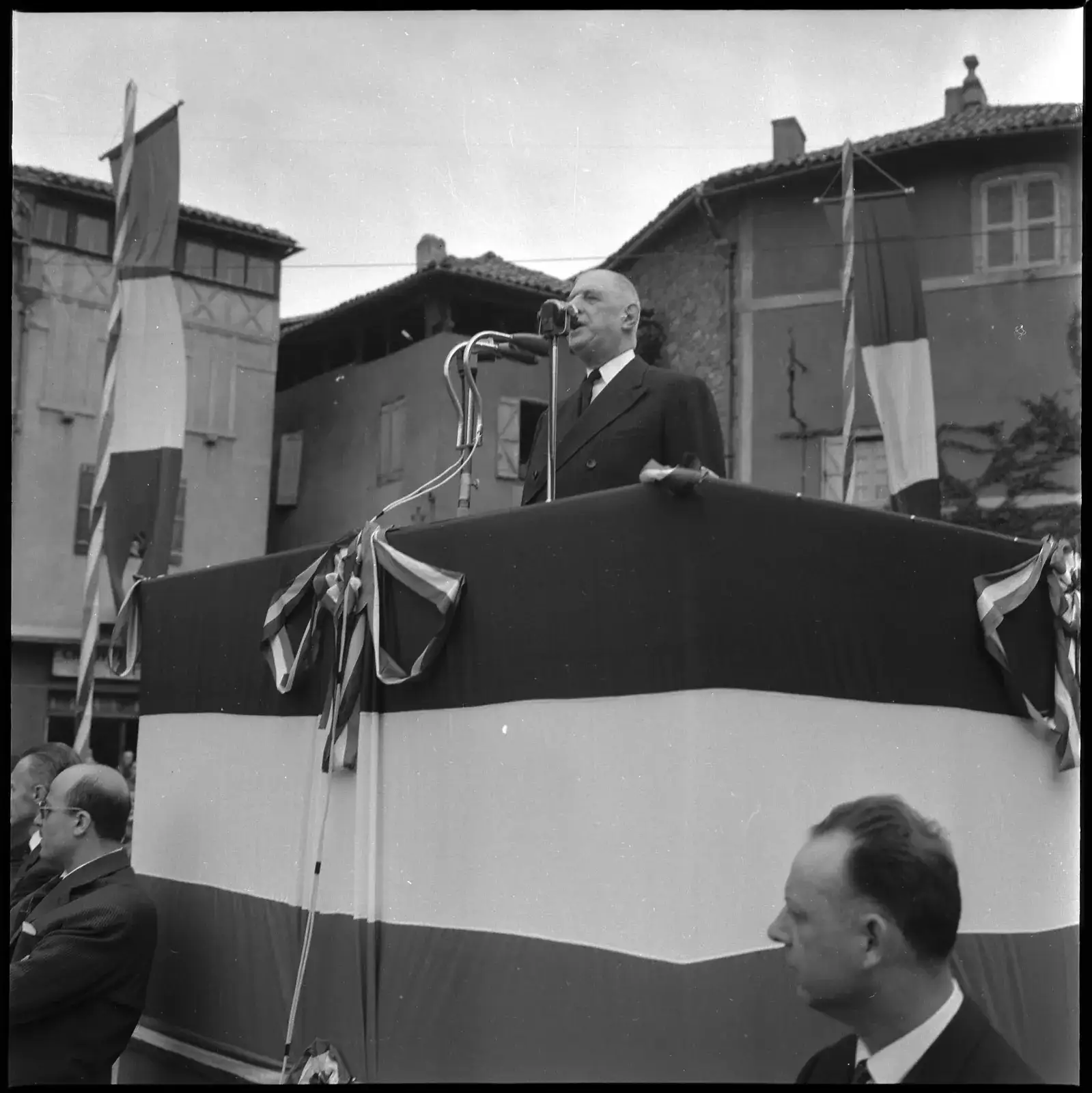
A referendum concerning both the Senate and the regions was called by de Gaulle himself in 1969. Two days ahead of the vote, on 25 April, he addressed the country. In the address, the general named a condition and a consequence: if the majority repudiated him, he would immediately cease to exercise his functions. The vote took place on 27 April. The count returned “no.” Shortly after midnight, a two-sentence communiqué came from Colombey-les-Deux-Églises, his village far from Paris: The general announced his decision to stop serving as President of the Republic, specifying that it would become effective from noon on that very day.
In the Serebryansky Forest I still keep the rules I wrote down in advance, when no one had yet tested them. Now my beloved is beside me. The morning fog stands between the trunks, and the water beyond them carries grey light past me.
In the evening, the owner of the empty cell opens the shared spreadsheet on his screen. He reads the top row, sees the status “approved,” finds a single refusal a little lower down, and puts the cursor in his own cell. Outside the window it is already dark, the chat is silent, and the cursor blinks, and his cell remains empty.


Worth reading
- Lee Kuan Yew, Ministerial Statement on Mr Teh Cheang Wan's death, Parliament, 26 Jan 1987 (NAS PDF)
- Lee Kuan Yew, condolence letter to Mrs Teh, 16 Dec 1986 (NAS PDF)
- Ulysses S. Grant, Deposition in the Trial of Orville E. Babcock, 12 Feb 1876 (American Presidency Project)
- Timothy Rives, Grant, Babcock, and the Whiskey Ring, Prologue (NARA), Fall 2000
- American Presidency Project, Ulysses S. Grant Event Timeline, row 07/29/1875
- Lee Kuan Yew, address published by CPIB, 28 Apr 2005: Teh asked to see him; no meeting until the investigations were over
- Assemblée nationale, 1er juin 1958: déclaration d'investiture du général de Gaulle (vote of investiture)
- Fondation Charles de Gaulle, chronology: investiture 1 June 1958; full powers 2 June 1958
- ZPE (Polish Ministry of Education), Przewrót majowy
- ZPE PDF, account of Lt. Henryk Piątkowski
- Dziennik Gazeta Prawna, Zamach majowy
- March Constitution 1921, Art. 46 (Biblioteka Sejmowa)
- EBSCO Research Starter, Piłsudski Seizes Power in Poland
- IPN, Konstytucja kwietniowa czyli ustrój prezydencki
- Journal officiel, Assemblée nationale, 1 June 1958
- Opération Corse (Wikipedia fr): Opération Résurrection, paratroopers and armour at Rambouillet
- Charles de Gaulle, allocution du 18 octobre 1962 (INA Fresques)
- Sénat, lois adoptées par voie de référendum
- Référendum constitutionnel français de 1962 (Wikipedia fr)
- Charles de Gaulle, discours du 25 avril 1969 (INA Fresques)
- Fondation Charles de Gaulle, 28 avril 1969
Citation
You may quote freely up to 300 characters, in quotation marks, with attribution to Pavlo Isaiev, "Exception for a Hero", caussa.blog.
© 2026 Pavlo Isaiev. The text is protected by copyright. Reprinting or translation is permitted only with the author's written consent and an active link to the original source.
New essays and studies by email
No spam, your address stays private: only new pieces as they come out. Unsubscribe anytime with one click.